
Spring Pastures and Clover Toxicity in Horses
Monday, March 23, 2020 | Debbie Schumann
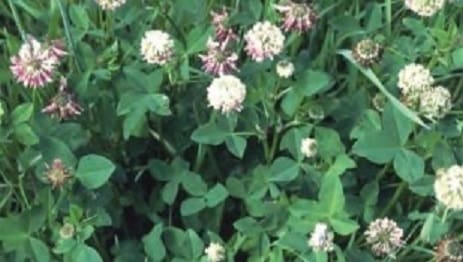
Although most of us may feel that springtime is still a few seasons away, the official start of spring is just around the corner. Slowly but surely the warmer, wetter weather ushers in lush spring pastures. These plentiful fields provide the perfect breeding ground for clover and, unknowingly, the toxins and fungi that might come with it.
As spring showers indeed bring many flowers, some of those blooms in your fields might include clover. Clover is a nitrogen-fixing plant and many horse owners use it in hay mixes. When used as a feed source, clover can provide your horses with sufficient protein, energy, and fiber to help meet their daily requirements. The three varieties that will most commonly grow in your horse’s pastures are red clover, white clover, and alsike clover. It’s only when it had grown moldy that feeding clover to your horse becomes concerning and potentially life threatening to their health. Moldy clover has typically become contaminated with a toxic fungus that can cause your horse to have serious health issues.
The most common toxic fungus to infect clover is Rhizoctonia leguminicol or the more colloquially termed ‘black patch’ fungus. Found on either red or white clover, this fungus is easily identified by the namesake bronze to black spots it grows on the leaves and stems of clover. The deadliness of the fungus doesn’t come from the plant itself but comes from a toxin called slaframine. Slaframine is the culprit for ‘the slobbers’ or when horses excessively drool since the toxin over-stimulates the salivary glands of a horse. Although your horse could fill several buckets with saliva, the slobbering rarely causes any negative threatening health effects. Slaframine thrives during the humid days and colder nights of early spring and can live in dried hay for up to ten months.

Once you’ve identified the black patch fungus, it can be effectively removed if you follow a few simple steps. First, remove horses from the pastures with infected clover. Then, mow down the affected spots as much as you can. Finally, use a pasture-friendly broad leaf herbicide to rid your fields from any remaining signs of the fungus.
Another warm weather clover to keep an eye on this spring is alsike clover. Alsike clover can be tricky to identify because it looks very similar to red and white clover. However, it’s possible to distinguish alsike clover by looking at its leaves, which lack the white ‘v’ that can be found on both white and red clovers. Unlike the relatively non-toxic white and red clovers, alsike clover causes two very serious medical conditions in horses: photosensitization and ‘big liver syndrome’.
The progressive destruction of the liver, also called ‘big liver syndrome’, is the most fatal effect of long-term exposure to aliske clover. The process happens quickly as the liver becomes damaged from the toxins in the clover and as liver scarring, or cirrhosis, continues the cells within the liver die. Clinical symptoms of liver failure from alsike clover include the following:
- Loss of appetite
- Weight loss
- Depression and lethargy
- Jaundice
- Colic
- Death
Needless to say, if you notice any of those changes in your horse you should immediately contact your veterinarian. When left unchecked, ‘big liver syndrome’ and the eventual liver failure are often fatal.
The other serious side effect of consuming alsike clover is photosensitization or when the non-pigmented (pink-skinned) areas of your horse’s skin become reddened or thickened. After short-term exposure, photosensitization will usually appear to look like a sunburn and eventually it becomes crusty, dies, and may begin to peel. While it may be unsightly, the sunburn entirely treatable. However, if your horse has a dark or black coat, they may be suffering liver damage without presenting with the more typical sunburn. In these instances, photosensitization will often present as lesions in their mouths, diarrhea, and even in severe cases of colic.
To clarify, clover itself rarely causes any health problems in horses. Clover toxicity is caused by the fungi that can propagate on the leaves and stems of the moldy plant. There are several straightforward pasture management tactics to prevent health issues from moldy clover. If you choose to feed clover hay, allow more drying time than you usually would. Pastures that are covered in thick clover should be fenced off during periods of heavy rainfall and extreme humidity. Thinner problem areas can be mowed down to increase sir flow, decrease humidity, and lower your risk of growing moldy clover. If herbicide seems necessary, be sure to target only the affected areas and read the label carefully before applying.
As with any changes in pasture vegetation, it’s important to always be on the lookout for any significant clover growth. Make reviewing your pasture management plans an annual priority, especially if you continue to see a trend of toxic plant growth. The simplest way to keep your horses from consuming toxic clover is to watch what your horses eat and to know what you grow.
Lisa Skylis is an MSU Alumna with a degree in Animal Sciences and a regular contributor to Saddle Up! Magazine. She is a horse enthusiast and avid supporter of therapeutic riding. Lisa is a professional freelance writer and inquiries can be sent to skylisli@msu.edu.
Featured Community



Save the Date
The STRIDE Dressage Club of Ocala, established in 1989, serves as the backbone for [...]
Latest News