USA Chester Weber Secret Weapon – Driven Dressage at Its Best
Monday, May 12, 2025 | Posted by Mary Phelps
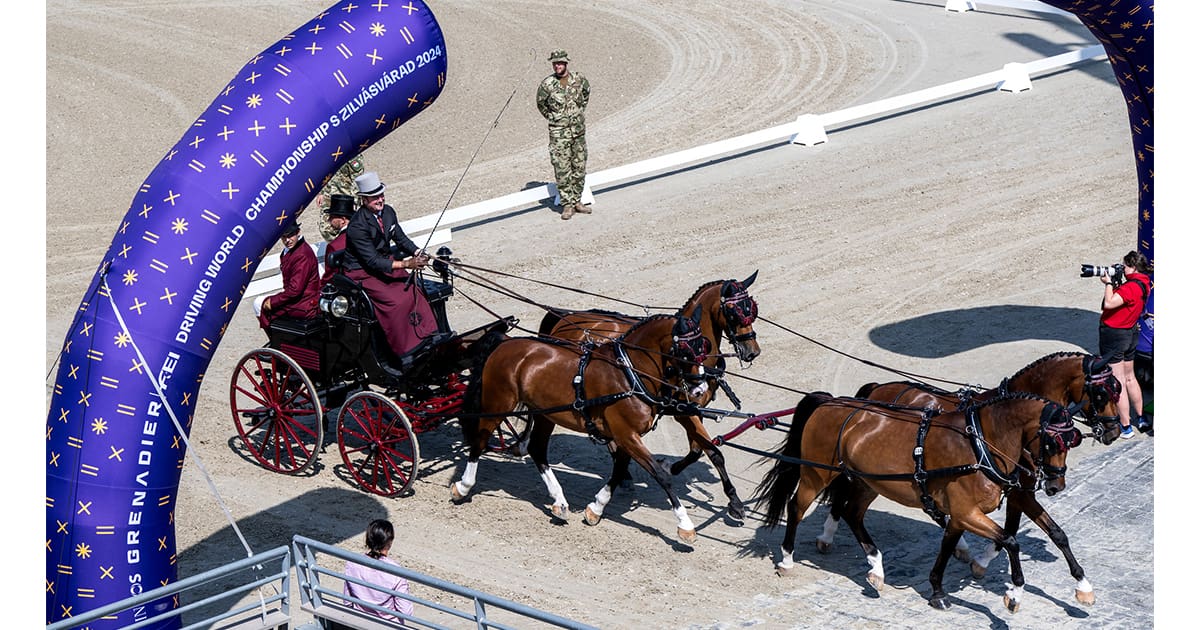
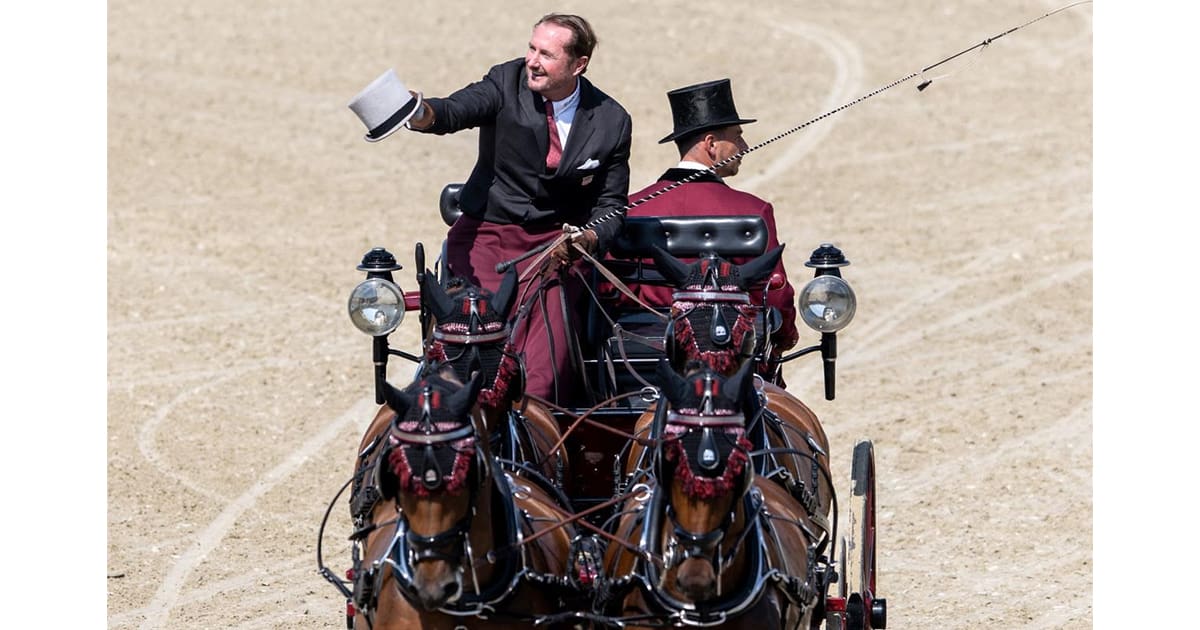
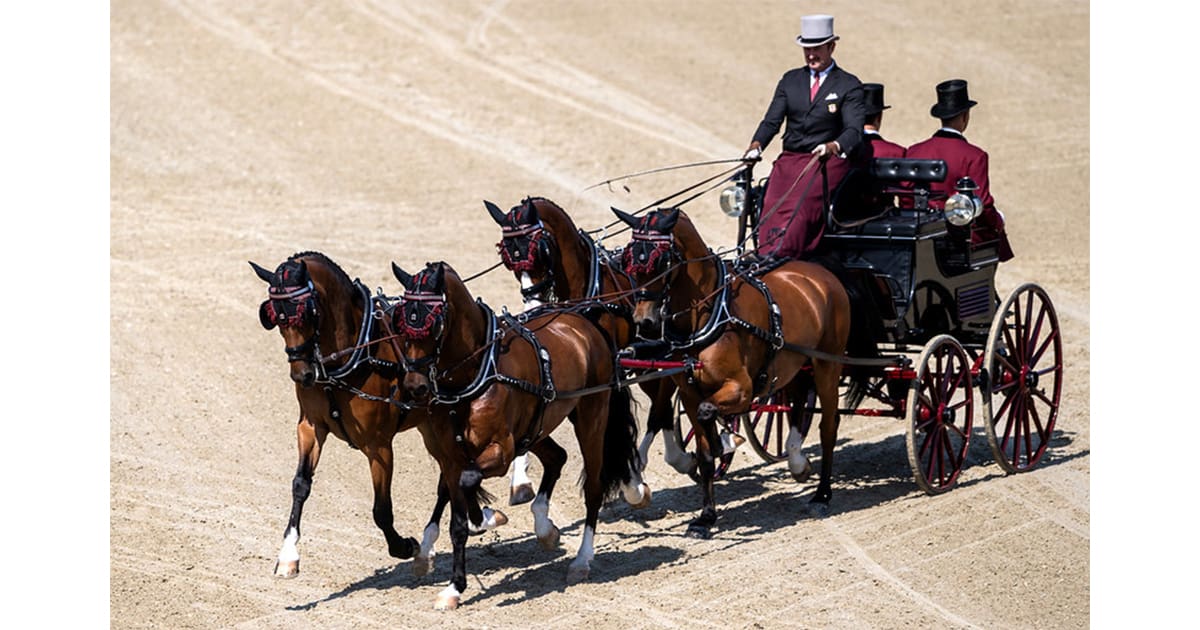
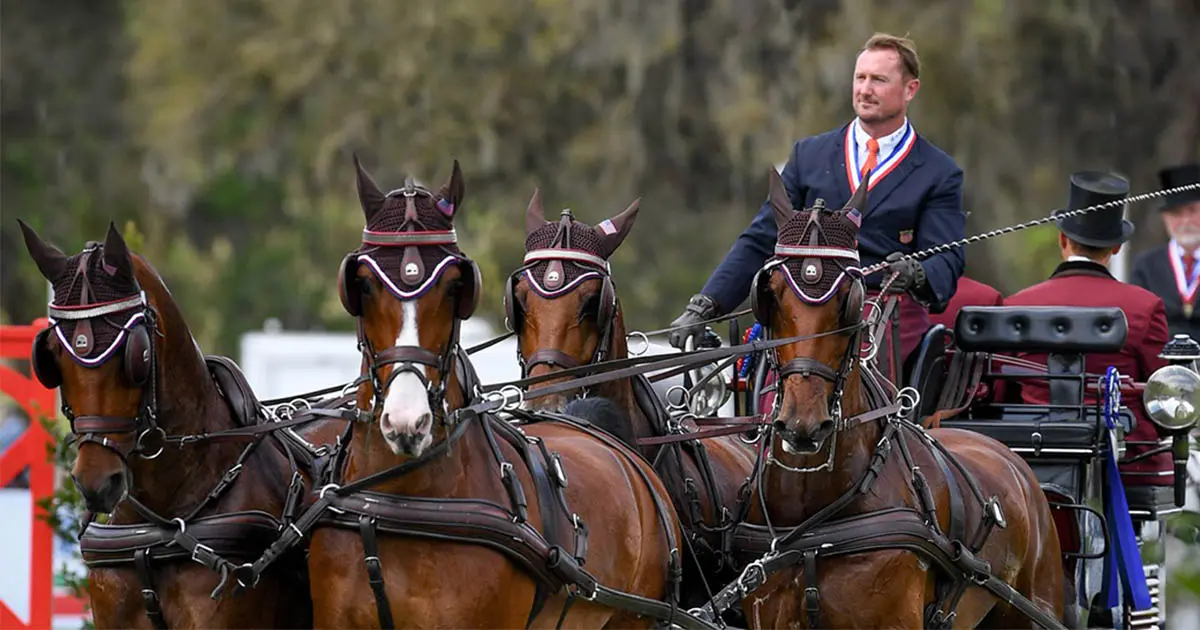
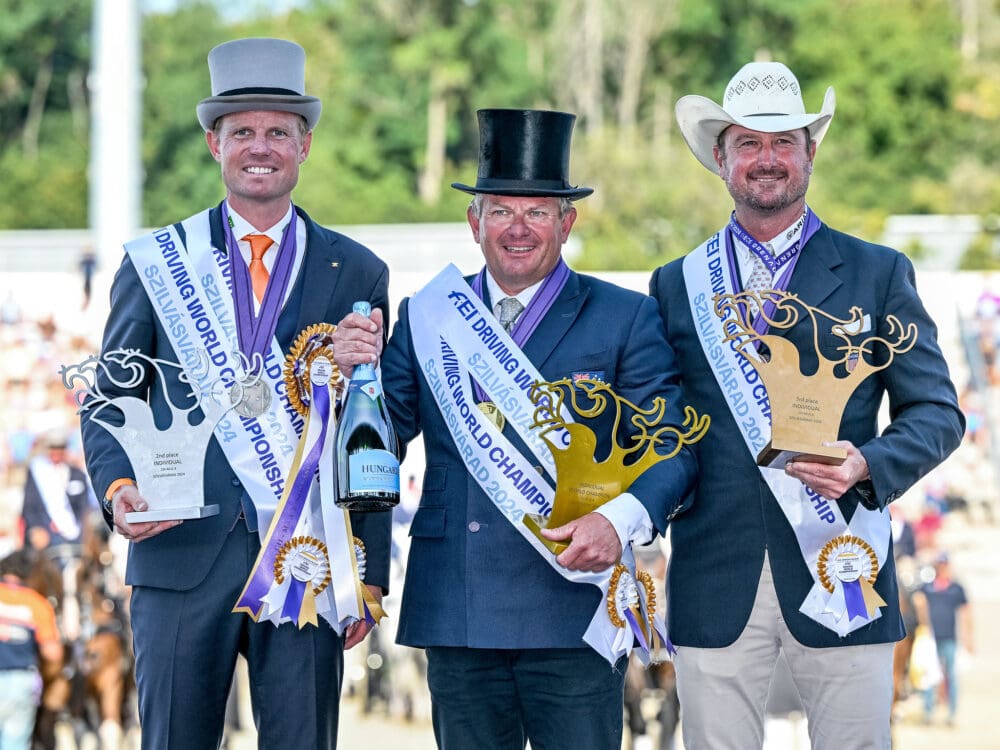
Bram Chardon (Silver), Boyd Excell (Gold) and Chester Weber Bronze overall at the 2024 FEI World Driving Championships for Four in Hand Horses
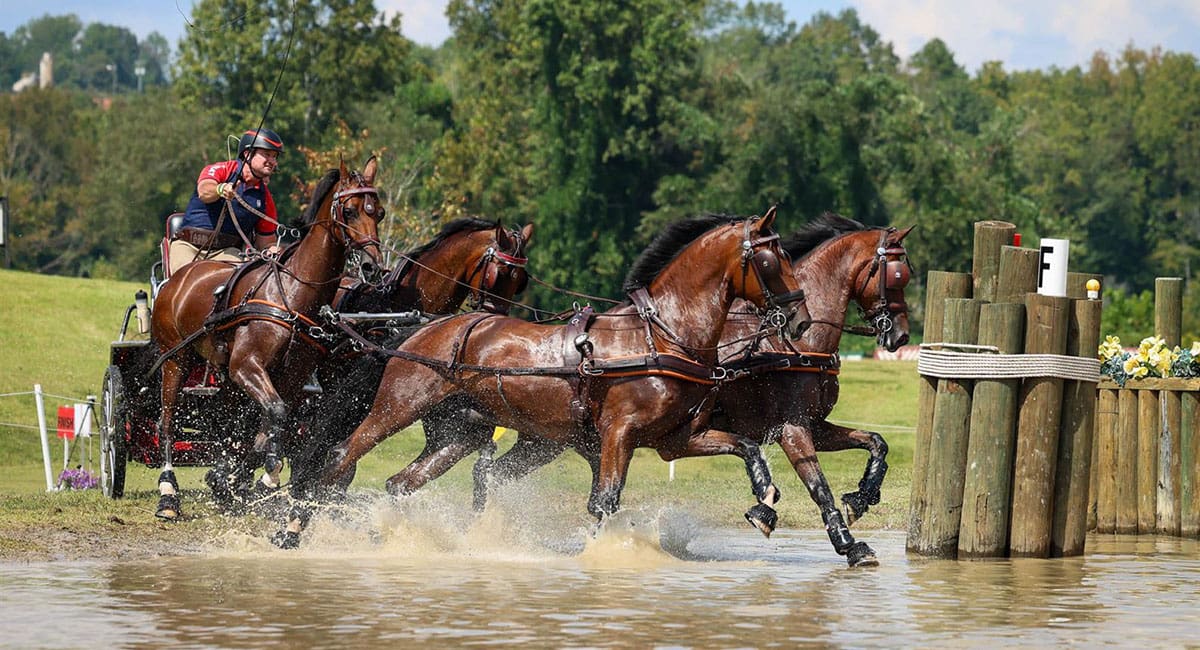
US Four-In-Hand Driver Chester Weber is one of only two FEI 3* horse team drivers actively competing in the US. It is a much larger and well-attended competition throughout the European schedule. Weber made history at the 2024 FEI World Driving Championships Szilvásvárad (HUN), scoring a world record result in the Dressage, contributing to his Bronze Medal at the end of the three-phase competition.
His dominance in the dressage phase of Driving Sport results from meticulous work in training and managing his team of horses and his support staff. He is one of only two active FEI four-in-hand drivers for the USA, which is an achievement. As the European season kicks off, there were recently 29 entries in Kronenberg (NED) for Four-In-Hand Horses.
The first stop on Weber’s 2025 Euro Tour, which begins in England, will be the Royal Windsor Horse Show, May 15-18, 2025. He hopes to maintain his dominance in Dressage and gain ground in his world standings. Weber will represent the USA as the only US driver, competing at the foot of the Royal Windsor Castle.
HRH Prince Philip, Founder of Combined Driving Sport
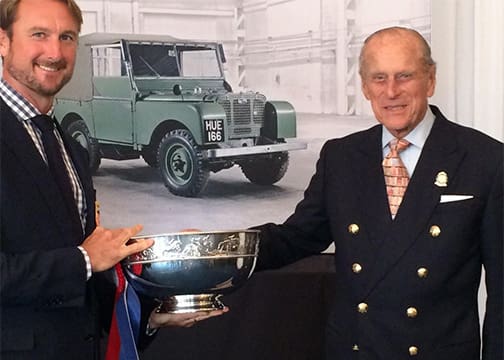
Chester Weber and HRH Prince Philip
Established in 1944, Windsor was the delight and passion of Queen Elizabeth. Her husband, HRH Prince Philip, served as President of the FEI from 1964 to 1986. During his tenure as the longest running president of the FEI–International Equestrian Federation, he developed he sport of Combined Driving modeled after Three-Day Eventing, the equestrian sport in which his daughter Princess Anne excelled as an Olympian. He was a world-class Driving athlete who won World Championship gold in 1980 with Great Britain. HRH Prince Philip created a legacy he took the most delight in during his lifetime. Prince Edward, his wife Sophie, and their daughter Lady Louise Windsor, who inherited her Grandfather’s driving pony team, are carrying on the Royal tradition.
Former Coachman to the Queen of England and employee of HRH the Duke of Edinburgh, David Saunders, was at the forefront of the early organization of Combined Driving as a sport. Now residing near Ocala, Florida, Saunders has joined Team Weber as a consultant and advisor to Weber’s latest undertaking, facilitating the development and preservation of the US Military Caisson Escort, a tradition for presidential funerals, providing solemn military honors at Arlington National Cemetery.
COVID 2020 – Making Lemonade out of Lemons
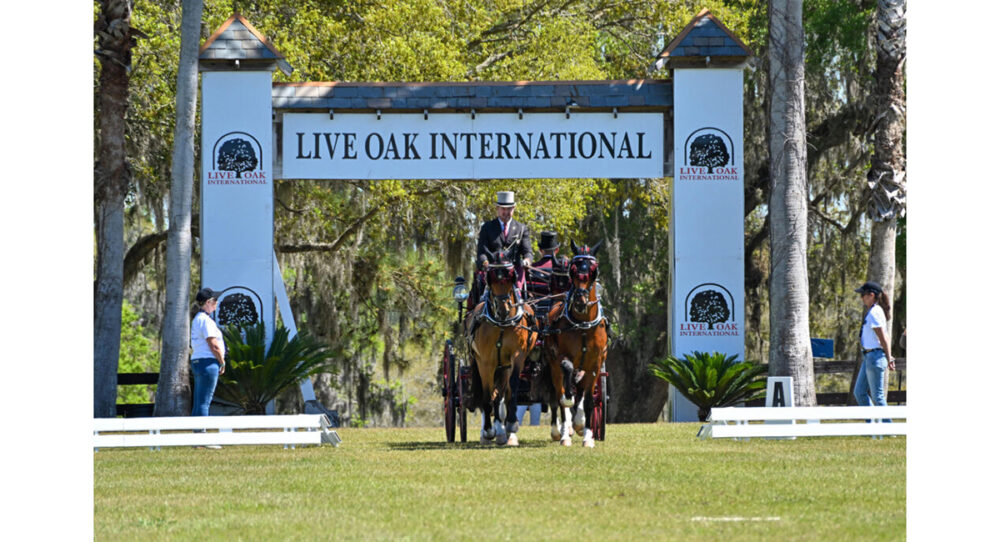
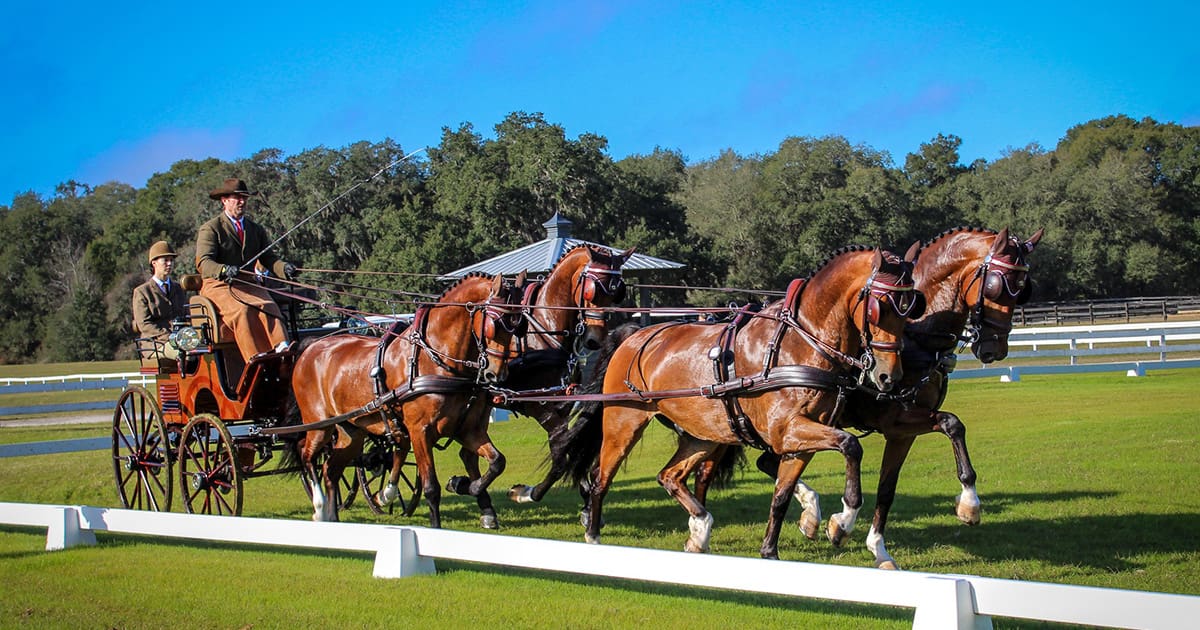
The Weber family hosts one of the premier driving events in the world at their farm in Ocala, Florida, every March. In 2020, Live Oak International was the last public event to be held before the world shut down due to the COVID-19 pandemic. Chester had to table his annual trip to compete in Europe, and quickly regrouped with a plan. He contacted Anne Gribbons, an Olympic 5* Dressage judge, who is also an active competitor and trainer for multiple top-level dressage athletes. Living close to Ocala, near Orlando, Griibbons began a systematic program in working with Weber’s horses and those in his team who were riders.
Deep Dive into Dressage for the Driving Horse with Anne Gribbons
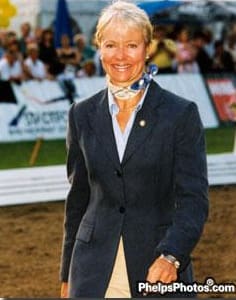
Anne Gribbons is an FEI 5* Olympic judge, USEF “S” and “R” Sports Horse Breeding judge, and international competitor.
The unplanned shutdown of the 2020 competition year presented an opportunity to develop a deep dive into pure and ridden dressage and how it relates to the driving horse. The concepts are all the same, now applied to four horses performing in unison the movements and protocols as defined in the FEI Driven Dressage Test 3*B for Four-in-Hand horses, executed in a 100×40 meter arena: balance, rhythm, impulsion, relaxation, and harmony.
What began with the luxury of time to focus on training has developed into an integral part of Weber’s meticulous training program. The horses are ridden three times a week. Chester’s long-time assistant, Aidine Soderstrom, and other qualified riders now regularly benefit from the training and direction of one of the world’s top dressage trainers and judges. Gribbons and Soderstrom are both Swedish in origin, and Anne recognized her talent for dressage as having the potential to be a top-level Dressage rider if she should ever choose to be. There has been consistent engagement with riders with differing skills and styles in the last five years.
The ultimate result: Driven Dressage at its best
With a keen eye for horses and years of experience as a breeder, Gribbons was one of the early influencers in introducing world-class bloodlines in the USA. She shares this ability with Weber, who has carefully invested in developing the ultimate Dutch harness horse. Weber’s wellness program and attention to every detail contribute to his ongoing success in the Dressage arena.
Gribbons knows the breed well, having been involved in the early development of the 2018 US Individual and Team Silver Medalist Verdades, ridden by Laura Graves. Out of a KWPN Dutch Driving Horse mare, Verdades and Graves showed the Dressage World how the infusion of such bloodlines could be developed to the highest level.
Dressage Riding for the Driven Dressage Horse
Admittedly, Gribbons has not spent much time in the carriage or observing the horses in harness. That’s Weber’s job, which he does expertly. However, Weber is present for most of the training sessions she conducts with the riders, observing the details and conferring with Gribbons on the objectives.
So, what are the objectives, differences, and similarities in developing the driving horse in ridden dressage?
More Similarities Than Differences
Chester Weber president of Live Oak International
In driving, there are more similarities than differences in what the judge is looking for, yet now it involves a carriage, and often multiples, using the hands, voice as aids, and the whip instead of the leg. The half halt in the driver’s body is felt by the horse(s) and communicated through the lines.
The frame the trainer desires for his horses is not as collected as expected for advanced horses in ridden dressage. Weber prefers them to be softer in hand, which can lead to issues when riding.
If the horse becomes too soft in both the mouth and pole, it may fall behind the leg, which creates an uncomfortable situation for both horse and rider. Maintaining a constant connection is crucial; the horse should seek contact with the rider’s hand without disappearing.
When observing training sessions, it’s clear that some horses tend to drop their heads too low, exploiting their cleverness by evading proper contact. The aim is to maintain balance while ensuring that communication relies on his hands, voice, and the whip as an aid, since he cannot use leg aids effectively like a rider would. This distinction highlights how driving requires different techniques compared to traditional riding.
Transitions and Pace
The focus is on teaching transitions essential for driven and ridden dressage disciplines. Maintaining control during transitions—especially at walk—is emphasized because disorganization can lead to substantial point deductions in competitions.
Clarity about specific movements within tests, such as transitioning between working trot and collected trot on center lines or serpentine patterns, is vital. A collected trot should appear more engaged and rhythmic while allowing the hindquarters to do most of the work without losing overall balance or contact
Lateral work plays a vital role in developing strength within each hind leg through exercises like shoulder-in; this foundational training helps prepare horses for more complex movements later on. As they become stronger through these exercises, they can be asked for lengthened trots, which should demonstrate increased volume rather than mere speed.
Core Principals
Regarding equipment used between ridden versus driven dressage contexts, many driving horses are trained using similar bits as those employed by riders, who often rely on snaffles rather than double bridles due primarily to differing needs based upon discipline requirements.
Ultimately, the core principles remain consistent across disciplines: maintaining proper contact while encouraging harmony between horse and rider/driver remains paramount moving forward into future practices focused increasingly on welfare standards throughout equestrian sports today.
Featured Community


Save the Date
The STRIDE Dressage Club of Ocala, established in 1989, serves as the backbone for [...]
Latest News