Hannah Irons Reflects of D4K Horsemastership Class with Olympic Dressage Medalist Allison Brock
Thursday, July 11, 2024 | Hannah Irons, Mary Phelps
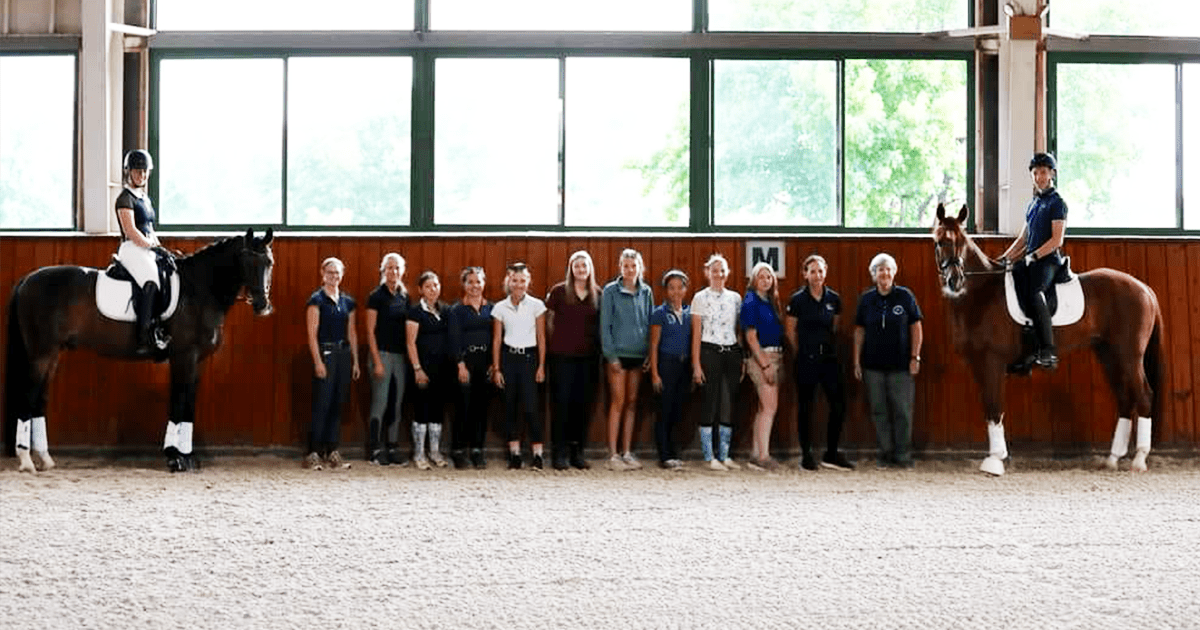
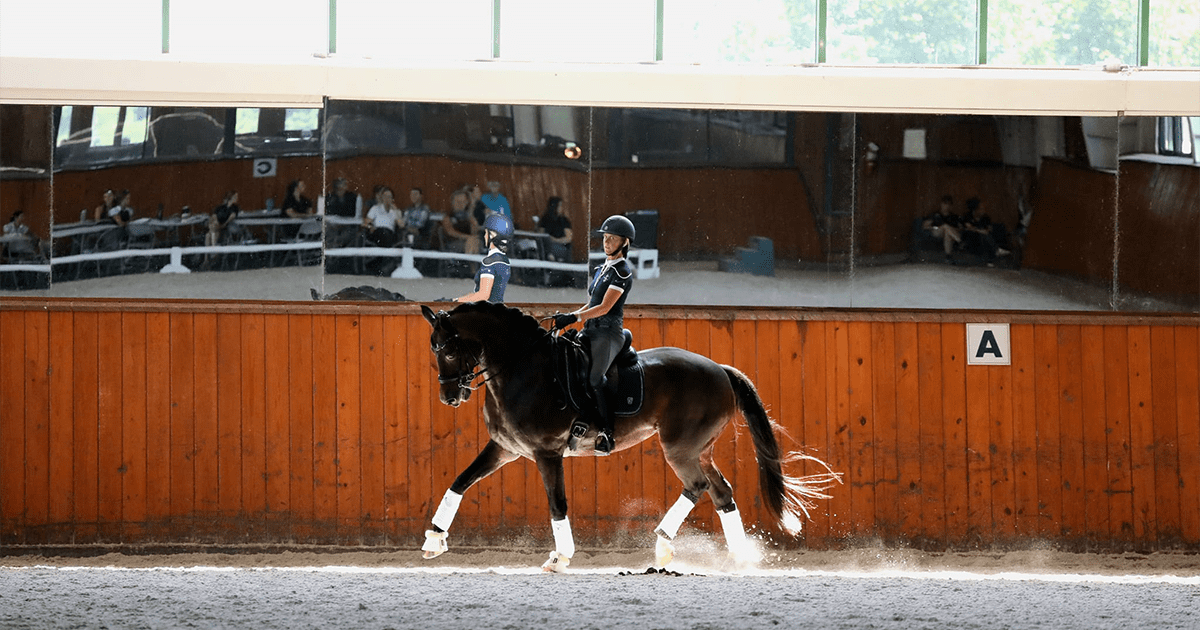
Hannah Irons reflected on an inspiring few days at Hilltop Farm, where she participated in the Dressage 4 Kids Horsemastership clinic with Olympians Allison Brock and Lendon Gray. In this article, she shares some of the training tips and takeaways.
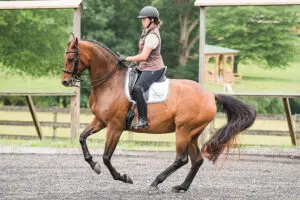
Images by Mary Herbst
Are We Babysitting Our Horses Too Much?
Yes, most of the time. When working with young horses, Ali Brock is very proactive in teaching them to problem-solve early on.
“Clear is kind when it comes to training. The sooner the horse can learn to accept more challenging questions, the feeling of being compressed in short spurts, and accepting you are riding ‘into them’, not just riding ‘the outside of them’, the easier time they will have moving up the levels. It isn’t fair to let them be dull, long, and flat until they are six and expect them to transition easily into more collection. “It’s like saying to them, ‘ok, you are grown up and need to learn flying changes now.'”
Little Conversations
Start by having little conversations about tougher subjects early on instead of big lectures and arguments when they are older and stronger. Think about how kids learn. We don’t wait until college to learn math and then demand they learn calculus in one year.
“We should think about good horse training as setting them up to find the right answer.” When riding one of the horses, Alison had no problem waiting them out with her inside leg on while keeping contact with them if they were bracing until they would hint, even slightly, towards the right answer and yield. The second they gave/yielded, she released the aid. Ali often quoted “9 pounds of leg to one pound of hand” as an example throughout the day.
Responsibility as a Rider
We all need to ride their ribcage more and their mouth less. They must give and balance around you. Not the other way around. “Think of the rider like the pole on a carousel horse. That is partly our responsibility as a rider. We can’t be afraid of letting the horse fall apart or the training getting a little messy. We are all guilty of working too hard to prevent mistakes and constantly overriding the horse.”
“You have to let them know we aren’t going to nurse them forward the whole time.” If they quit or fall apart when you take your leg away, that is a training opportunity. Most importantly, we need to check ourselves too. Clamping with our hips tight and our legs spurring the horse to go is like trying to drive with a parking brake on. “You can’t tell the horse to go underneath and stop on top.”
Start Each Session as if Your Horse has Amnesia
Throughout the two days, one theme was “We must give the horses the ride they need, not the one we want until it becomes the ride we want.” If that means doing trot-canter-trot-canter transitions on a 20-meter circle to help them…that is ok. Ultimately, whether the horse is four years old or Grand Prix, we are all just trying to get them on the bit and on the aids. And that is also ok.
Ali said she starts each training session with her horses as if they have amnesia and have forgotten everything. She checks all the basic questions on the ground and then under-saddle in the warmup before moving on. Can you go forward from the lightest aid? Can you back up? Can I put your neck down more if I want? Can you yield sideways? Ali never avoids the sticky spots. The horses know. “They have to come to your terms, or we will always be on theirs.”
Short Spurts of Quality
Training should not Be drilling. Especially when changing rules or expectations, “Don’t stay there too long. Short spurts of quality.” Ali’s training approach asked for one step of something, then release and reward. For example, when introducing the idea of sideways to a green horse, halt, outside hand down, inside leg back and on while the inside rein gently lifts up. The second the horse takes one step away with inside hind, give. Even in the rein back, Ali said, “If you can’t do one step of an easy rein back, you shouldn’t do two.” It was amazing how quickly the horses caught on to this instead of the rider trying to force five steps to happen.
Ali followed a similar approach when it came to teaching the riders. There is a time and place for coaching instead of teaching, but Ali said she likes to avoid “spoon-feeding” her students information. Like horses, we learn by problem-solving. In a way, we must be set up to find the right solution on our own. Because dressage is a very “feel-based” activity, Ali often used simple life analogies or kinesthetic learning techniques to help the riders find the right feel.
For example, she didn’t hesitate to have the riders hold the end of the stirrup leather in both hands to achieve quieter hands or steady the horse in the contact. One point that made the biggest difference for some riders was having the rider hold the rein as a driving rein on the side the horse wants to be stronger on. This was a positive and productive correction instead of yelling, “Don’t pull on the left rein,” ninety-two times.
Most importantly, thank you, Ali, for taking time out of your crazy schedule to help the future of our sport. You always inspire me to ride better and open my eyes to better influence my horses and students to become the best version of themselves in a simple and kind way. I am forever thankful to Lendon Gray and Dressage 4 Kids. I wouldn’t be where I am today without this amazing program. Thank you to Hilltop Farm for hosting it and Mary Herbst for organizing it.
About Allison Brock
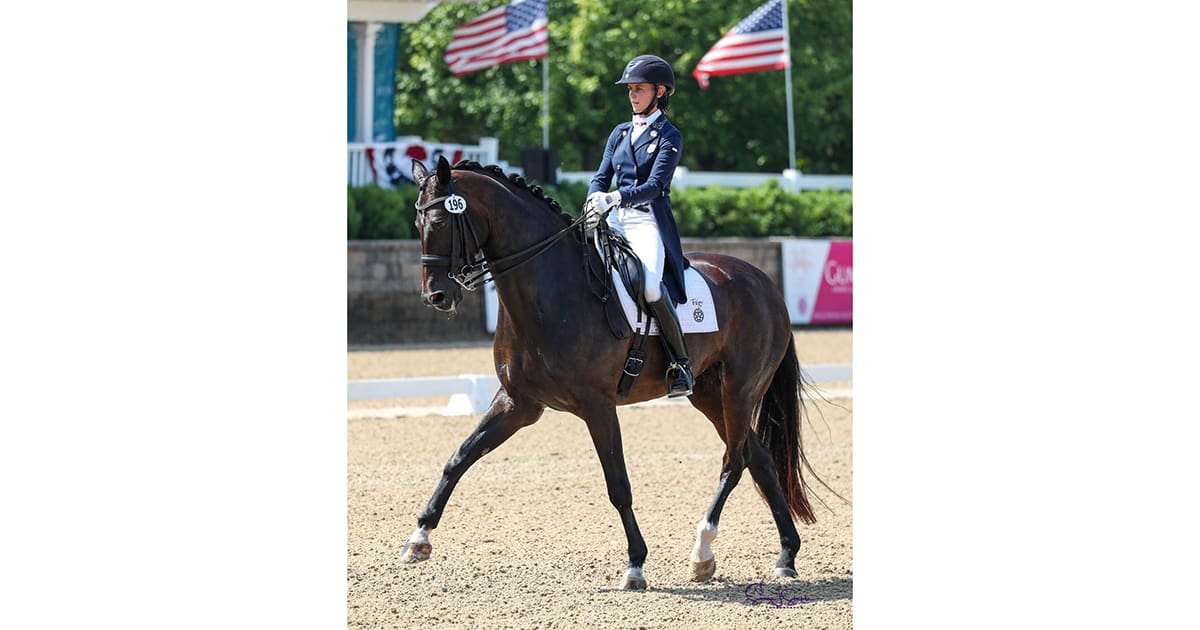
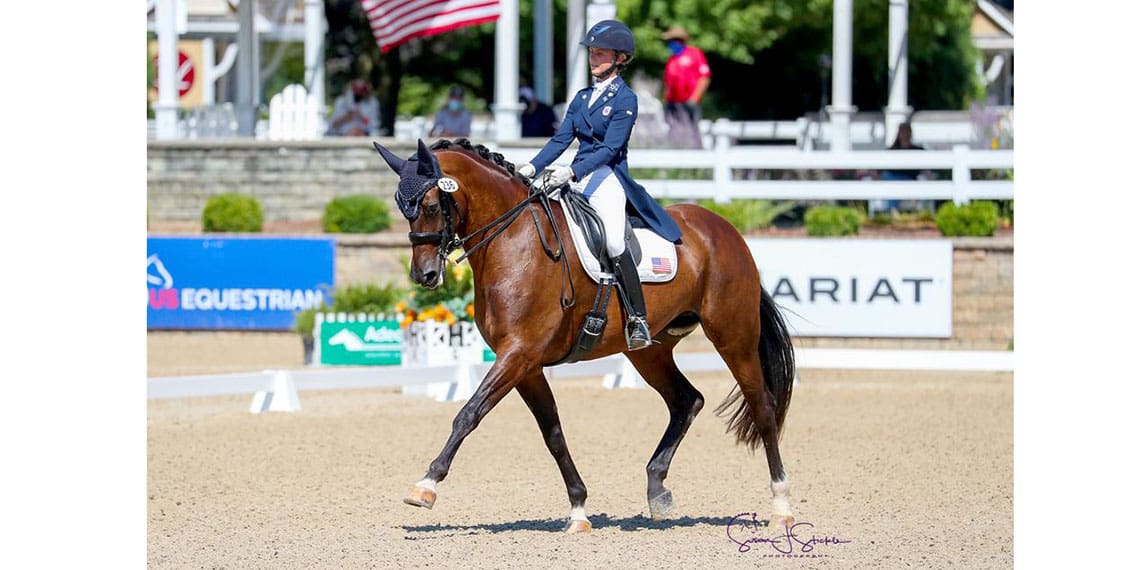
Olympian Allison Brock contributed to the US Team’s Bronze Medal in the 2016 Olympic Games in Rio De Janerio on her horse, Rosevelt. In 2020, she was named to the newly created U.S. Olympic & Paralympic Committee Mental Health Task Force to develop recommendations and resources for athlete mental health and well-being.
Watch the Video – Allison Brock – Visualizing Your Dressage Test
Featured Community

Save the Date

The STRIDE Dressage Club of Ocala, established in 1989, serves as the backbone for [...]
Latest News