
Equine Testing With USDA Wreaks Heartache For Some When Importing Horses
Monday, August 24, 2020 | Mary Phelps

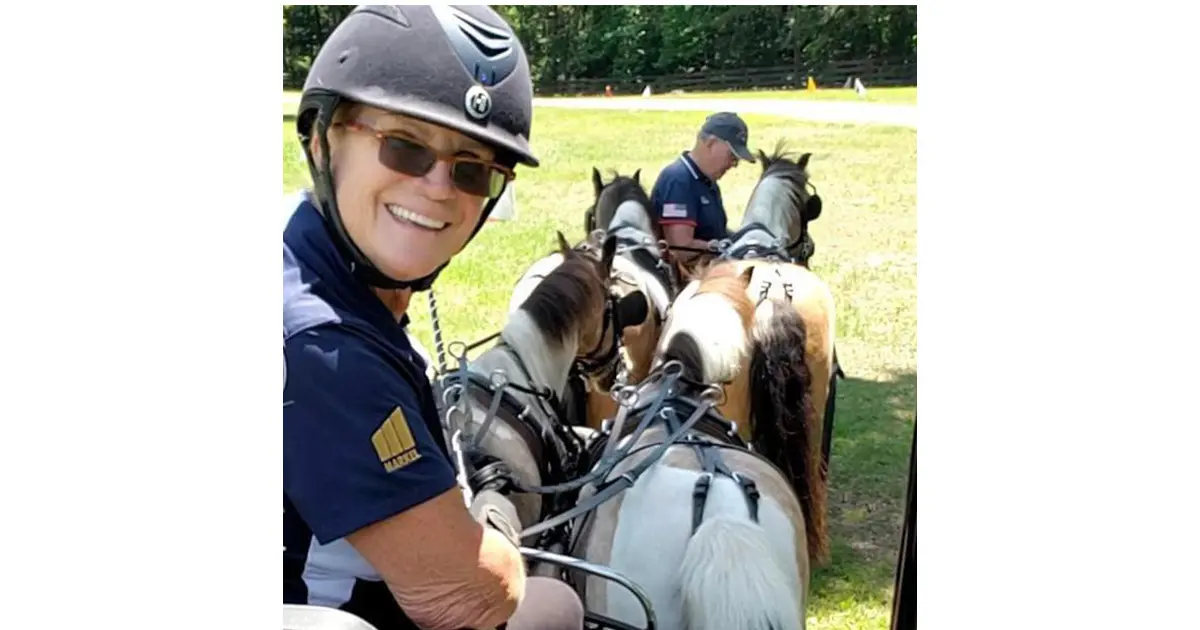
Just two months before the pandemic shut down international travel, Cheryl Benefiel made a trip to the United Kingdom searching for that “dream horse.” She found her. A beautiful, five-year-old gray mare named Libris Charlotte. As Benefiel began the process of getting her new horse to America, she was unaware that she was about to join a tragic group of horse owners – those bringing a horse into the U.S. that, upon landing, doesn’t test negative for an infectious disease.
©Victoria DeMore Photography

“Everything became a complete nightmare,” said Benefiel of the battle to save her new mare after a non-negative test.
The U.S. Department of Agriculture, in its role of protecting the U.S. domestic horse herd from infectious diseases brought in from abroad, requires that arriving horses be immediately quarantined and tested for the diseases glanders, dourine, equine piroplasmosis and equine infectious anemia, of which the first three are the most serious and the main focus of testing. Most horses being imported into the U.S. are coming from countries that have also successfully eradicated these diseases and therefore, there is little risk that these imported horses carry any of them.
Generally, the importation process goes somewhat smoothly. But every year, a dozen or more horses, even after testing negative before boarding a plane to the U.S., test positive for one of these diseases upon arriving in America. Most horse owners refer to this as a false positive test result. The USDA prefers the term non-negative and because it affects so few horses, it has not been of much concern to the USDA.
“Since 2016, the U.S. has imported close to 39,000 horses though airports. Of this total, fewer than one percent of horses have received non-negative results during import quarantine,” said Mike Stepien with the USDA’s Animal and Plant Health Inspection Service (APHIS).
Non Negative Results Don’t Mean Horses Have the Disease
But for those one percent of horses that don’t test negative, the importation effort can turn into not only a huge headache for their owners but in some cases also a heartache.
When asked how many of those dozen horses a year might actually have the disease for which the USDA tested them positive, Cliff Williamson, with the American Horse Council, said “none of them.” And for those horses that do come up with a false positive test, owners face two choices – send the horse back from whence it came or euthanize it. Williamson said the difference between life and death for that horse often comes down to the owner’s financial resources.
“The majority of these animals are ones that were purchased abroad and then brought into the U.S. But there have been at least two valuable, high-profile horses that recently got caught up in this testing situation. They were given more time to resolve this, probably because of their value. Those given a line in the sand don’t have the resources to stand up to the USDA,” Williamson said.
One of those more well-known cases was the Grand Prix dressage horse Sagacious HF, owned by Hyperion Farm, which tested positive for glanders after a return trip to the U.S. three years ago. The case raised awareness of the nightmare that horse owners can face when importing horses to the U.S. but the problem still exists as Benefiel sadly discovered. And she has not been the only case this year.
Featured Community


Save the Date
The STRIDE Dressage Club of Ocala, established in 1989, serves as the backbone for [...]
Latest News