Shipping Horses Long Distances: Pave the Way for a Smooth Journey
Tuesday, June 3, 2025 | Alice Collins
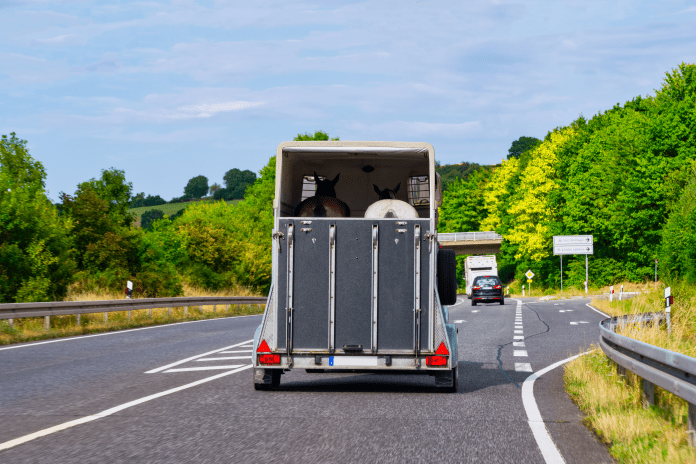
With competition being a year-round effort, many owners and competitors will face the prospect of horses in their care making a long journey to reach a winter base or training facility. While traveling with experienced horses and handlers can be a breeze, there are considerations and measures anyone shipping horses over long distances can take to maximize their comfort and well-being.

Markel with Mary Phelps – Visit the website
1-800-572-3286
Mary.Phelps@markel.com
Be sure your investment is protected. Numerous accidents involving trailers carrying horses are reported each year. Drivers are not as aware of how to pass and deal with horse vans. That, tragically, has resulted in huge losses, with sometimes an entire truckload being affected.
” I have always thought I could afford to self-insure my horses, but then realized when all four of them are on their way to a show, or traveling back and forth from New York to Wellington, what if…” A longtime client.
Preparation
Ensure the horse is comfortable and calm loading and unloading from the trailer before the day of departure. A negative experience while loading can significantly impact a horse’s comfort and confidence levels on the journey.
All horses should be up to date on vaccines before traveling. Equine Influenza and Equine Herpes Virus (EHV-1) are highly contagious, deadly diseases and should be included in any routine vaccination program. Both vaccinations are mandatory for all horses attending a United States Equestrian Federation (USEF) competition.
Biosecurity
Simple daily practices are crucial in reducing a horse’s risk of contracting an infectious disease. These measures include washing hands between grooming horses and disinfecting grooming supplies often.
If using a commercial shipper, confirm that the horse area is well ventilated and has been thoroughly disinfected to help prevent the spread of disease.
At shows or a new location, set up a footbath at each entry/exit point for people to use on leaving and entering. Consider mounting clean stable drapes between stalls to prevent horses from touching noses with others. Many contagious diseases are easily transmitted and spread quickly through a stable or showground if the proper measures are not taken.
Keep a close eye on each horse’s behavior for anything out of the ordinary. Take rectal temperatures first thing in the morning and then again late afternoon. If you have a resting rectal temperature greater than 101.5 degrees Fahrenheit, contact your veterinarian immediately. If your horse seems depressed or unwilling to eat or has nasal discharge, contact your veterinarian as soon as possible. Early medical attention for an infectious disease significantly impacts the horse’s recovery and the wider community’s well-being.
The best way to safeguard any horse’s health is to bolster its immune system with suitable nutrition and exercise, a proper deworming program, and up-to-date vaccinations.
Shipping Fever
Shipping fever is a respiratory disease commonly associated with horses being transported over long distances. The stress of travel can weaken the immune system, and the horse’s inability to lower its head for many hours can cause respiratory complications, particularly when the correct functioning of the trachea, which clears dirt and debris from the lower airway, is impeded. It can lead to pneumonia, pleuritis, and respiratory distress.
Common symptoms after travel are hyperventilation, high temperature, coughing, and nasal discharge. The horse may seem depressed and uninterested in food or water. If shipping fever is suspected, a vet should be called immediately. Untreated, it can be life-threatening.
Pre-emptive steps to help avoid shipping fever include breaking up long journeys over several days and unloading the horse every six to eight hours, if possible. Make sure the horse is adequately hydrated before travel. This may include preventative administration of oral or intravenous fluids by a veterinarian. Ship horses in a loose stall whenever possible so their heads do not need to be tied up during long journeys. If the horse is on immunosuppressant drugs, consult a veterinarian about whether these should be discontinued before travel.
Equipment
A trailer that has proper ventilation is paramount. Air should enter the front of the trailer and exit the rear. However, no horse should be shipped in a trailer with air blowing directly into its face. Many corneal ulcers can be prevented by ensuring that horses are not tied up with air blowing directly through a hay net, as it can allow small pieces of hay to get stuck in their eyes.
Consider whether the horse would benefit from leg protection on the journey. Shipping boots may not be beneficial for horses unaccustomed to traveling, particularly young or minimally handled horses. It may not be safe to correctly fit them on these horses, and the possibility of them slipping down may outweigh the benefits of the protection they afford. For mature horses that are used to quilts and bandages or journeys where the temperature will not be high, boots or bandages can help to prevent abrasions or injury while in transit.
Horses are shipped all around the globe every day by truck, trailer, and plane. Making good husbandry decisions and ensuring proper preparation, correct handling, and safe conditions all help ensure their safety and comfort on the journey, allowing them to arrive fit and ready for the task at hand.
For additional questions, veterinary assistance, or to discuss how Palm Beach Equine Clinic can help you prepare your horse for travel, call 561-793-1599 or visit https://equineclinic.com.


Latest News
LOOKING BACK

Making their Palm Beach debut after joining forces in Holland this past October, were [...]
Join Us in The Virtual VendorThis section will be growing in leaps and bounds [...]
Featured Real Estate





Featured Horse